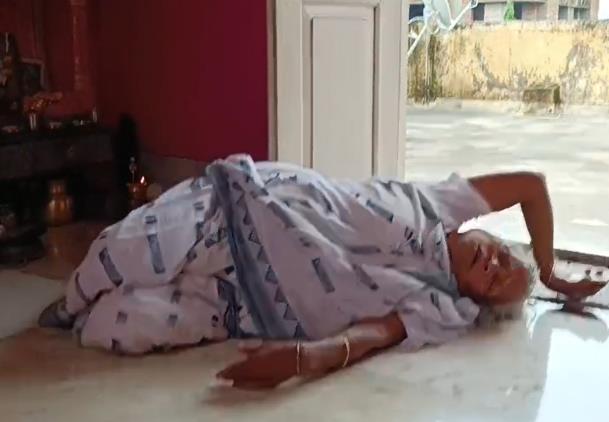
The condition had always been there; only its acknowledgment had arrived late. With that naming, something changed. My pain no longer had to justify itself or be translated into something more acceptable. It was allowed to exist as pain. For the first time, I felt a strange kind of comfort, not because the pain had lessened, but because it had finally been believed. In that flash, the past rearranged itself. The years of pain, of misnaming, of being unheard, began to make sense. Everything that came before that diagnosis had existed outside the boundaries of medical legitimacy. What failed me was not medicine alone, but the absence of listening.
This story extends beyond the personal; it is rhetorical. It reveals how women's pain is often sorted, translated, delayed, and displaced into narratives of stress, weakness, or imagination. My body became a site where evidence was demanded before belief could be granted. This project emerges from that rupture and from the space between what the body knows and what medicine is willing to name.
As Gloria Steinem (1978) once imagined, if men were the ones who menstruated, it would likely be celebrated, ritualized, funded, and spoken of with pride rather than silence. However, as menstruation is associated with women, it is rendered ordinary and pushed into silence. It becomes something to be managed quietly, spoken of in hushed tones, if at all. Within this culture of silence, a range of gynaecological conditions, like, endometriosis, PCOD, adenomyosis, postpartum haemorrhage, infertility, menorrhagia, polymenorrhagia, dysmenorrhea, and amenorrhea continue to be misunderstood, minimized, or dismissed. Rather than being recognized as forms of legitimate physical suffering, they are often reframed as emotional excess, stress, or hormonal instability. This pattern is not merely a residue of the past; it remains embedded within contemporary global health systems. The consequence is a persistent failure to listen to women's bodies, to take their pain seriously, and to provide care that fully acknowledges the complexity and materiality of their experiences.
The relative neglect of conditions such as endometriosis becomes difficult to ignore. This points to how menstrual and reproductive health remain structurally under-researched and under-recognized. Endometriosis is a chronic gynaecological condition affecting approximately one in ten individuals of reproductive age (World Health Organization [WHO], 2023; Zondervan et al., 2020). It is commonly associated with severe pelvic pain, fatigue, infertility, and cyclical physical impairment. Despite its prevalence and well-documented impact on quality of life, endometriosis remains significantly underdiagnosed and poorly understood within clinical practice. Studies indicate that individuals with endometriosis often wait between seven and ten years to receive a formal diagnosis (De Corte et al., 2025; Hudelist et al., 2012). During this prolonged diagnostic period, like me, many patients frequently encounter dismissal, psychologization, and normalization of their symptoms. Pain is often reframed as stress, anxiety, or functional disturbance rather than investigated as a marker of chronic illness.
Consequently, individuals with endometriosis navigate years of medical uncertainty while enduring disruptions to work, relationships, and everyday participation in social life. These persistent delays raise critical questions about how endometriosis is recognized, interpreted, and institutionally managed. While biomedical research typically frames endometriosis as a pathological condition caused by ectopic endometrial tissue growth, such approaches alone cannot fully account for the broader social consequences of delayed diagnosis, disbelief, and misrecognition. Increasingly, scholars have begun to examine how cultural norms, gendered expectations, and communicative practices shape the interpretation of menstrual and pelvic pain. Historical analyses of women's health care demonstrate that women's bodily experiences have often been dismissed as exaggerated, emotional, or hormonally driven, rather than treated as credible sources of knowledge (Cleghorn, 2021). Situated within this broader history of gendered medical skepticism, endometriosis emerges not only as a biological condition but also as one whose recognition is mediated by cultural and institutional frameworks.
In that light, I read endometriosis as not only a medical condition, but as a story of what is allowed to remain unknown. Its long invisibility across biomedical, political, and social spaces suggests that ignorance here is not simply a gap, but something that has been quietly produced and maintained. In this way, endometriosis sits alongside other contested conditions where knowledge feels unfinished; and where science, for various reasons, has not fully arrived. When I look at it through this lens, I see how consistently women's experiences of illness have been left out of what counts as credible knowledge. Feminist and social science scholars have already begun to trace these absences, showing how women's accounts have been excluded from dominant narratives. However, there is still so much that remains unexamined, particularly in terms of how this not-knowing continues to be shaped in present-day healthcare systems and policies, particularly in low- and middle-income contexts (Hudson, 2021). What lingers, then, is a sense of urgency because endometriosis is not rare, nor is it insignificant. It is a chronic, life-altering condition that affects millions of people across the world. And still, it waits for attention, for recognition, for a deeper kind of listening. It becomes important to engage with it to not only study the disease, but to confront the conditions that allow certain kinds of suffering to remain unseen for so long.